Access to affordable, nutritious food is vital for our mental health.
When that access is uncertain, food insecurity can contribute to stress, anxiety and poor mental health.
Housing costs, planning, transport and neighbourhood infrastructure all shape people’s ability to afford and access healthy food.
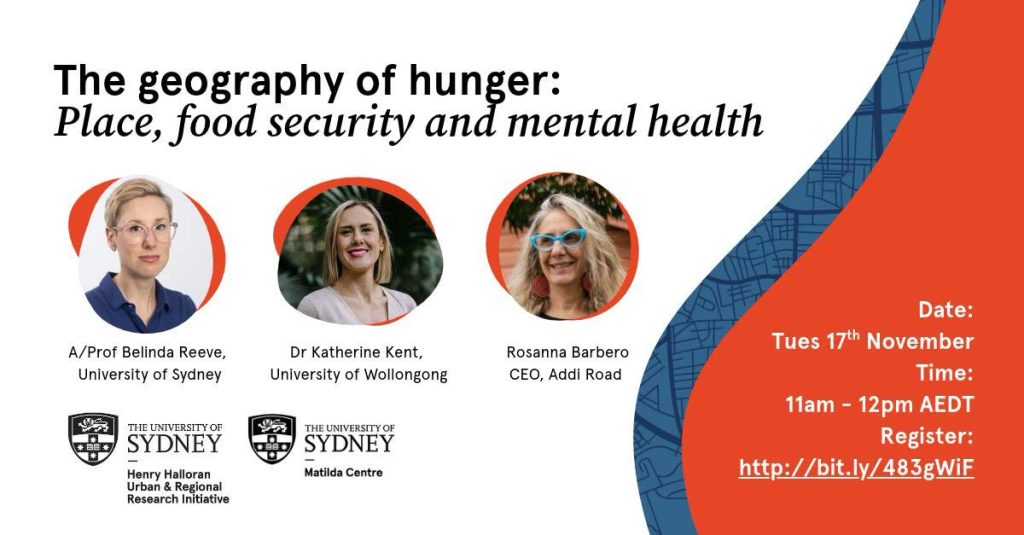
In dialogue with Addi Road, the University of Sydney‘s Henry Halloran Urban and Regional Institute and Matilda Centre came together for an online conversation to consider how local policy, planning and community-led initiatives can help create healthier, more sustainable food systems.
Their talk was titled The Geography of Hunger: Place, Food Security and Mental Health
Addi Road CEO Rosanna Barbero joined Associate Professor Belinda Reeve, Director of Sydney Health Law (University of Sydney Law School), who spoke about how local councils could support neighbourhood food systems and prevent food insecurity.
Dr Katherine Kent, Senior Lecturer in Nutrition and Dietetics (UOW: University of Wollongong, Australia), discussed the links between food insecurity, mental health, and wellbeing in the Illawarra-Shoalhaven and what work still needed to be done in this area.
Rosanna Barbero addressed how food insecurity affects local families’ mental health and wellbeing and what community and government actions are needed now as the situation worsens. The significance of Addi Road as a street-level, placed-based organisation was highlighted as an integral part of the way we work and why our approach has been so successful.
Charity ’empires’ and large-scale models inserting themselves into problems and situations they are often detached from is not the best way to operate. And certainly not the only way. How can they solve anything, let alone have a relationship with people and place, when they are separated from it and what is going on at a lived community level?
Rosanna emphasised how Addi Road works with food as a human right, while connecting with food justice sensibilities on a bigger planning and policy scale. The cutting edge between the human and the communal versus the institutional, the governmental and the corporate.
She was critical of food charity models that tended to force people into accepting second-rate food and, with that, a multiplying pressure to be grateful, to surrender their life stories and any integrity of identity, to be framed in narrative ways that demand a show of need from the beginning of any process through to an endgame of thank-you promotions.
Rosanna noted too how anxiety, stress and depression are becoming heightened, with food relief a thermometer for mental health and community well-being.
This coalface perception dovetails very strongly with the recent Foodbank Australia Hunger Report 2026 that notes “pessimism” to be almost as big a problem now as hunger and poverty.
People are losing hope.
In this climate, problems become major triggers. A hassle with Centrelink or making the rent on where you live can lead to all kinds of explosions and harm. Rosanna explained that we see the police more often here at Addi Road as a result of this stress and growing voltage. People are on edge. That which is crackling below the surface can lead to a complete crack-up.
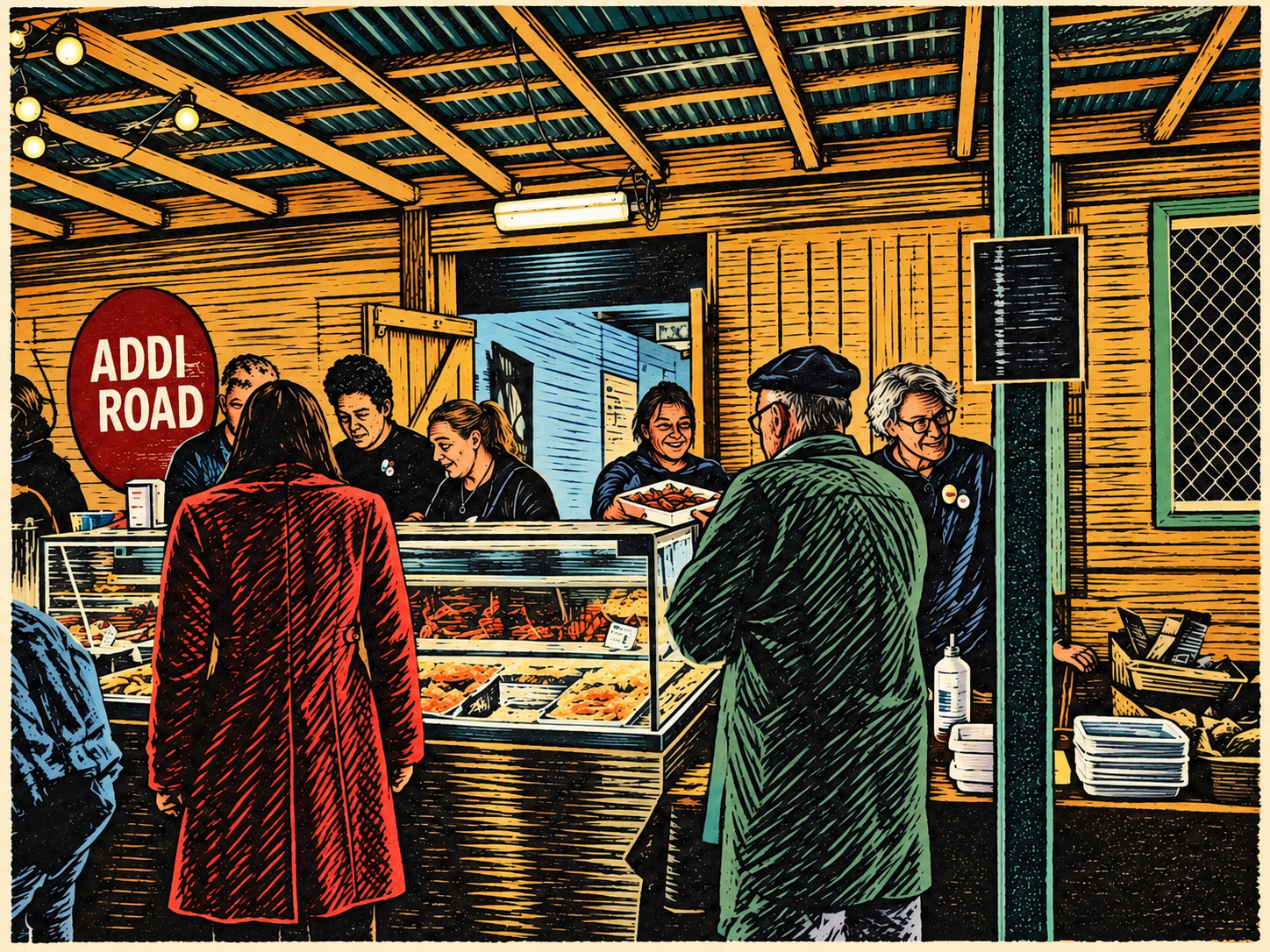
Against this triggering pressure, Addi Road’s approach as much as its services becomes vital to food justice. “Our way here is very egalitarian,” Rosanna said. “At Addi Road we are street level literally. You walk through the main gates, you could be anyone. We have the Food Pantry and Wednesday Night Lights. Many other wraparound services and partner organisations here too with us, because we understand the problem in a macro way while facing it and responding on a more intimate and human level, seeing and meeting the complications and even how they can change over weeks or months. There’s no big glass wall or cold office feeling to the community site. We’re on the ground. Absolutely on the ground.”
She gives an example of what this understanding means. “At Addi Road, hunger rarely looks like an empty fridge. It looks like a mother skipping meals so her children can eat, an older woman eating alone, or a family surviving on the cheapest, most processed food on the shelf.’
“Real food security means dignity and choice,” she says. “A way of acting and thinking that extends to big-picture ideas like ‘food sovereignty’.
“A handful of corporations control our seeds, supply chains, and supermarket shelves. Their value chains push unhealthy, ultra-processed food, carry heavy social and environmental costs, and crumble under pressure in a crisis (like Covid). Yet they’re propped up by trade deals, tax breaks and taxpayers’ money.”
“Australia exports most of what farmers grow, while families in Marrickville queue for food. The idea that we must produce more to feed the world mainly serves industrial agriculture. Producing more wont end hunger if people can’t afford what’s produced.”
“We need a completely new model of food provision and this model exists,” Rosanna says. As just one example in a very complex analysis, she observed that “during COVID, long supply chains broke and local networks, including ours at Addi Road, kept people fed… We need food systems that are much more diverse, community-controlled and strong enough to keep feeding people when the next shock comes.”
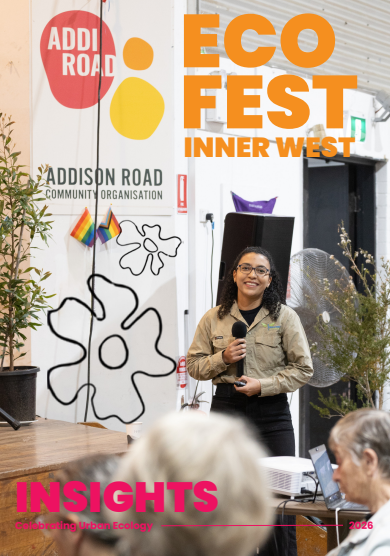
EcoFest Inner West: Insights from a community coming together for the environment
What does a greener, healthier Inner West look like? And what will it take to get there?
Hungry Ghosts, Hopeful Action
Foodbank’s Hunger Report 2026 has just been delivered. Their national enquiry into the state of the nation tells us something we already know, “that hunger has become a defining feature of life for too many households”. Families, especially single-parents, are feeling the ‘food insecurity’ hammer.
Addi Road Artists, the exhibition
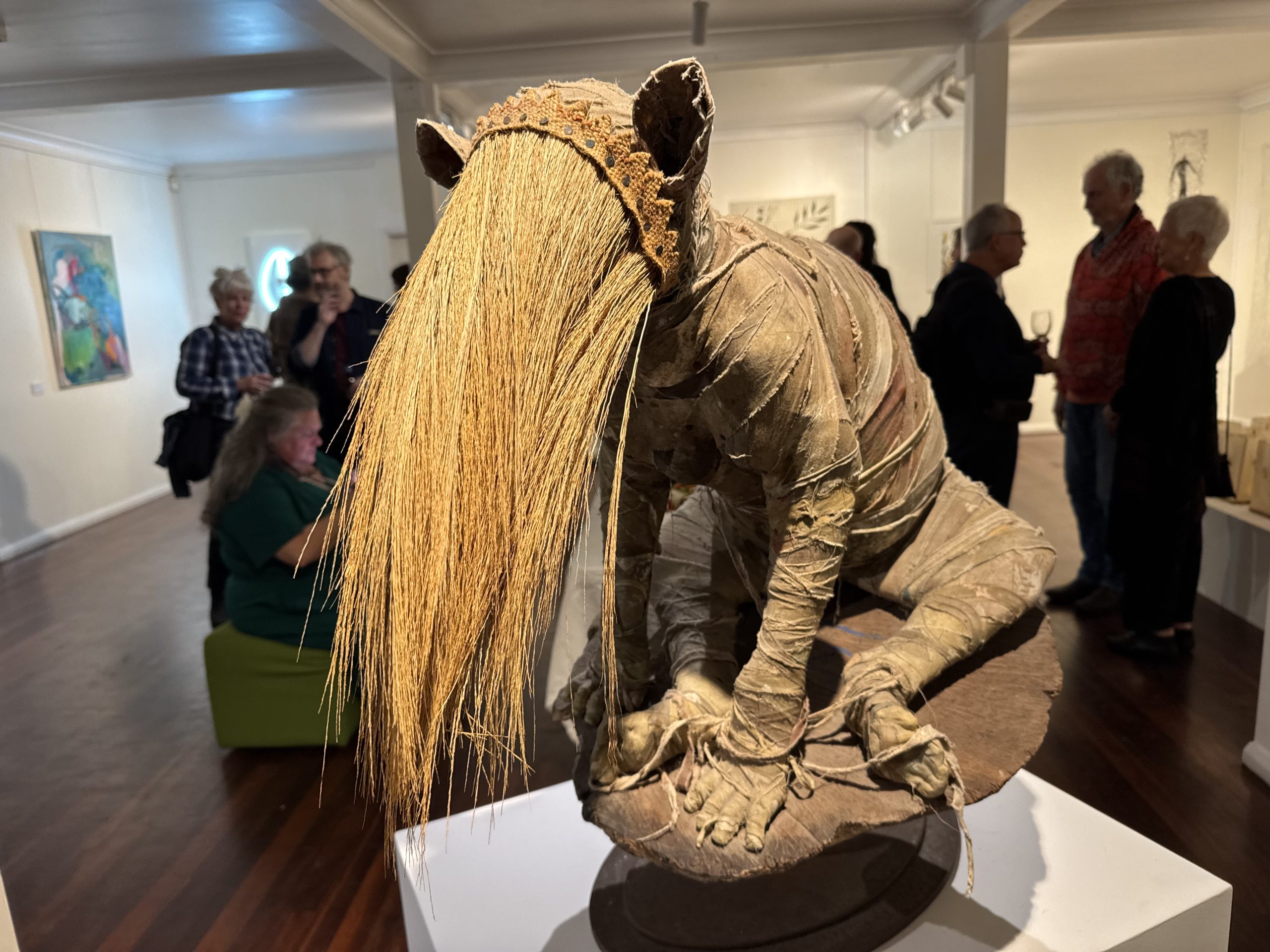
At the opening of Addi Road Artists exhibition, Mark Mordue spoke to a few of the artists.